Universitat Pompeu Fabra
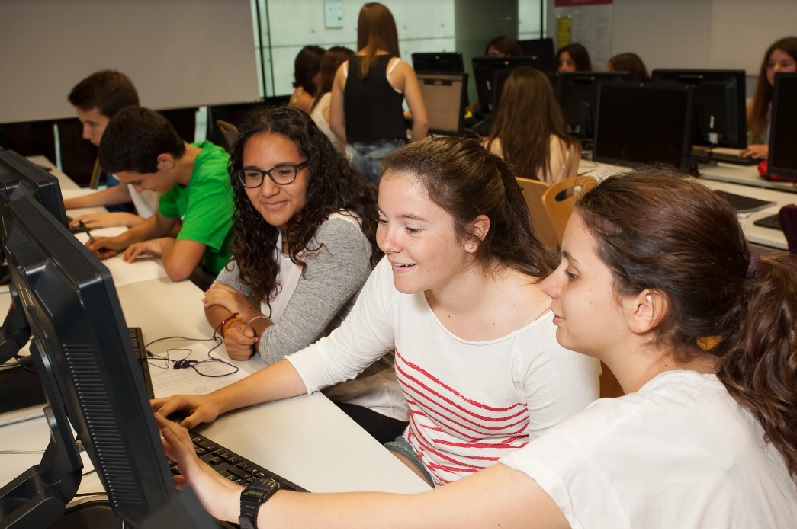
Come to the UPF Junior Campus
The summer course for secondary school, high school and intermediate training courses
Register!
UPF Senior, university studies for people over 50
Registration open until June 30th
Further information

"There are more and more young people who question the use that is being made of their money”
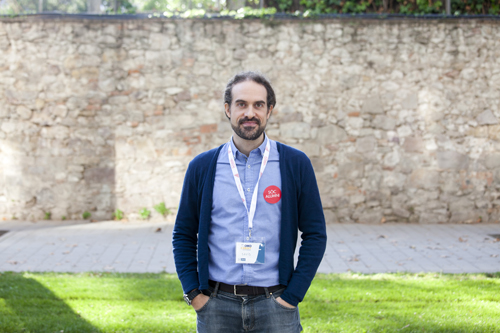
David Díaz Quijano i Barbero has a bachelor’s degree in Business Management and Administration (2001) from Pompeu Fabra University and a master’s degree in Business Communication, specializing in digital technologies (2003), from UPF-BSM (then IDEC).
Since 2008, he has been the coordinator of Oikocredit Catalunya, an association that promotes a model of cooperation based on ethical finance and global justice and uses the funds of socially conscious investors.
Oikocredit Catalunya gives support to Oikocredit International, a credit cooperative (not a bank) that provides funding for microfinance, fair trade organizations, cooperatives and SMEs.
Funded privately through the investments of more than 51,000 individuals and organizations, in 2015 Oikocredit surpassed 1,000 million euros in total assets, with disbursements for its partner organizations of 419 million, and net lendable funds raised of 102 million euros.
— How do you remember your time spent at UPF?
I think that for many people the time spent at university is one of great discoveries when your personal concerns are aroused. For me it was really like that, and even though I always thought that the teaching of Business Management and Administration, at least at that time, was scarcely critical and plural, I do have fond memories of it.
— You have recently returned to the campus to participate in the UPFeina and UPF Solidària fairs. How was the experience?
It is always nice to return to your roots a little... and do so after being away for a few years, and at events like these two fairs, it’s very exciting. At both fairs I have met students who are about to finish their studies, and I think it has been very interesting for them to find out about other types of companies and organizations like the one I represent, that make generating economic benefits and generating social benefits compatible.
— Where does your interest in ethical finance and the social solidarity economy stem from?
Already during my studies I started doing some volunteer work with social organizations and NGOs, and I got interested in other ways of doing economics. After, I worked for a few years on communication issues in the third sector, and via the NGO Setem I got to know about ethical finance and Oikocredit, and I was really excited by the huge impact I could see they had by generating improvements in society through economic activity. It was also a way to re-apply my background in the world of business with strong ethics.
— How do Oikocredit Catalunya and Oikocredit International interrelate?
Oikocredit is an international cooperative dedicated to raising funds from individuals and institutions of “developed” countries to finance business projects with a positive social and environmental impact in “developing” countries, mainly in Latin America, Africa and Asia. At Oikocredit Catalunya within the cooperative we basically represent the individuals and institutions in our country who want to invest their savings, and disseminate this business model and ethical finance in general.
— Oikocredit is not a banking institution. Which services does it provide and which does it not compared to ethical banks?
As a non-bank credit cooperative, Oikocredit offers only a fixed-term ethical investment “product”, by acquiring shares in its capital. Therefore, it is a complement to the banking and financial services that other ethical finance banking institutions, such as Triodos Bank and Fiare Banca Etica, may provide.
— With which institutions does Oikocredit work? What process does an investor’s money follow until it materializes in development projects?
Approximately 80% of Oikocredit’s activity focuses on microfinance, through local microfinance institutions, and the other 20% focuses directly on productive projects in the agricultural sector, manufacturing, fair trade or renewable energy. The money that any individual can invest is used to provide loans to such projects through our network of regional branches, led by highly qualified local staff, who assess the projects both economically and socially and environmentally and manage the loans.
— What are the implications for the investors in Oikocredit that is a cooperative?
Being a cooperative, all strategic decisions must be approved at a meeting, where each direct member has a vote, regardless of their participation in the capital. As such it is a more participatory and more democratic model than other business forms, and with its 40 plus years of history, Oikocredit has also demonstrated that it is feasible and efficient.
— What is the significance of the fact that Oikocredit provides investors with a triple result: social, environmental and financial?
Basically, that our goal is not to maximize economic benefits and that’s that, but that we will always do so so that our activity also has a positive social and environmental impact, which ultimately reverts throughout society, and in our investors.
— Do your customers seek the profitability of their funds or for them does that come in second place?
In fact in our case we do not speak of customers but of partners, which already shows a different character. And although profitability is also essential in our business, most people who invest in Oikocredit do so to make transparent and ethical use of their funds and not so much to make large financial profits.
— Is your target population mainly young people? Does the more elderly population find it difficult to put its trust in alternatives for investing their money?
Indeed, our partner profile is an average age of 55, quite high! But there are more and more young people who question the use that is being made of their money, no matter how little, and who are interested in ethical finance, and we intend to bring it to the generations of the future.
— Are people sufficiently aware of the use made of the money the entrust to traditional banks? How compatible is banking secrecy with today’s information overload society?
There is growing awareness of the impacts of our consumption decisions, but even so there are still many people who do not even know that their bank may be investing their money to finance armed conflicts such as the war in Syria. With regard to banking secrecy and information overload, ethical finance institutions publish all their investments and transactions for those who wish to consult them, and it has been shown that this has no negative impact on their results. So, perhaps we should ask what are the interests -and implications- underlying banking secrecy and the opacity of much of our financial system.
— Should universities deal in greater depth with the issue of the social solidarity economy and ethical finance in their syllabuses?
In our country, ethical finance and the social economy still account for a relatively small percentage of GDP. But their high social impact, especially in the current context of structural crises we are experiencing, I believe more than justifies their increasing presence in all syllabuses, especially in the faculties of economics and business.
Related Assets
NODE UPF concentra en una setmana una desena d’activitats vinculades a la transferència de coneixement

NODE UPF concentra en una setmana una desena d’activitats vinculades a la transferència de coneixement
Entre el 7 i l’11 de novembre la Universitat organitza un conjunt d’activitats repartides entre els tres campus, centrades en la col·laboració público-privada, les càtedres d’empresa, els doctorats industrials, la creació de start-up i spin-off, la incorporació de talent i l’emprenedoria i la innovació, entre d’altres.
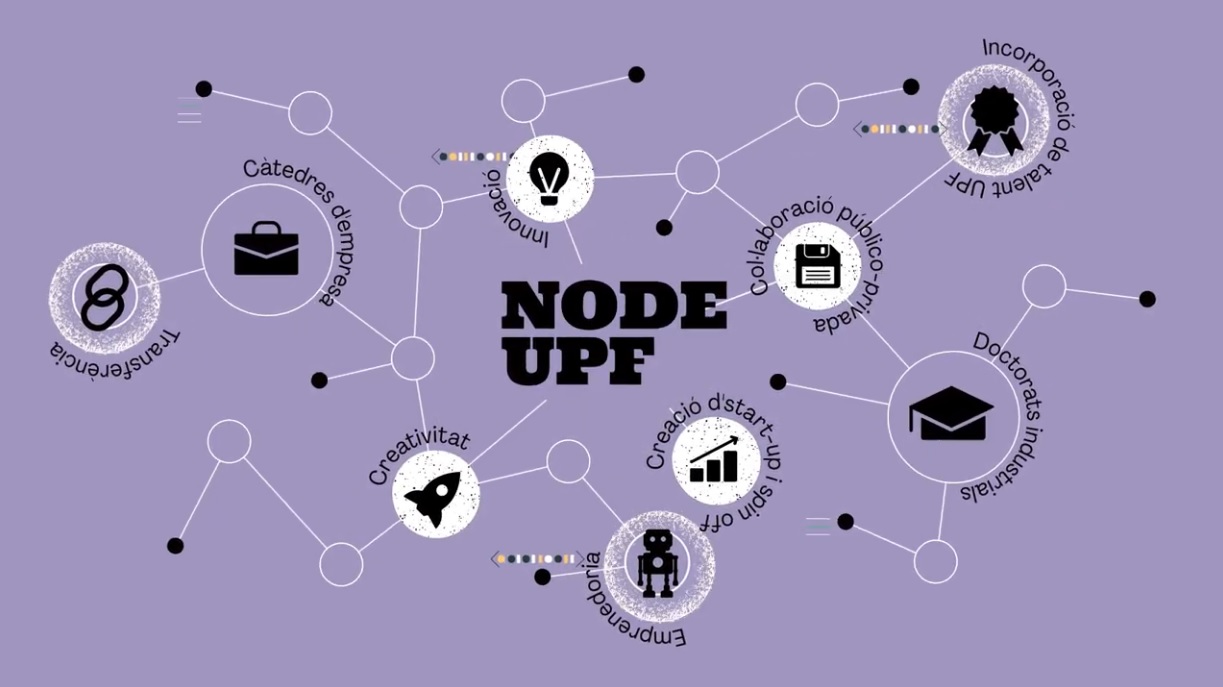
NODE UPF: Setmana de la Transferència de Coneixement és una iniciativa impulsada pel Vicerectorat de Transferència del Coneixement i el Consell Social de la UPF que aplegarà una desena d’activitats vinculades a aquest àmbit. El seu objectiu és posar en valor i donar a conèixer la UPF com a universitat altament compromesa amb l’entorn social i econòmic, que posa el seu potencial de recerca i de talent al servei del desenvolupament i el creixement econòmic del país.
Entre el 7 i l’11 de novembre, i repartides entre els tres campus (les activitats estan obertes a tothom que hi estigui interessat, prèvia inscripció a través de la web) la UPF presentarà experiències i opcions de col·laboració, com les càtedres d’empresa, els doctorats industrials, la creació de start-up i spin off, possibilitats d’emprenedoria i innovació, i nous formats de treball conjunt. En el marc de la Setmana, se celebrarà també UPFeina, la fira d’ocupació de la UPF, i el lliurament de diversos premis per incentivar l’emprenedoria i la innovació.
“Cal promoure que la Universitat sigui un entorn porós, accessible i obert a la societat, per tal de fomentar un intercanvi de coneixement que superi l’acció unidireccional i potenciï un procés bidireccional, entre la UPF i els agents externs"
Segons Eulàlia de Nadal, vicerectora de Transferència del Coneixement de la UPF, “una de les missions principals de la Universitat és la d’afavorir que el coneixement generat reverteixi directament a la societat per contribuir a millorar la competitivitat del país i el benestar de la població”. Per això, segons la vicerectora, “cal promoure que la Universitat sigui un entorn porós, accessible i obert a la societat, per tal de fomentar un intercanvi de coneixement que superi l’acció unidireccional i potenciï un procés bidireccional, entre la UPF i els agents externs, d’intercanvi d’idees, coneixement i expertesa. Només així s’acomplirà la missió de generar benefici social i econòmic en l’entorn.”
Un intens programa d’activitats per obrir ponts amb la societat
Les activitats que integren el programa de NODE UPF: Setmana de la Transferència de Coneixement s’han organitzat de manera que no se superposen entre elles, i estan agrupades per campus: les del 7 i l’11 de novembre tindran lloc al campus del Poblenou; les del 8 de novembre, al campus del Mar, i les del 9 i 10 de novembre, al campus de la Ciutadella.
Posen èmfasi en la connexió amb la societat i l’entorn empresarial, un element que per a Eulàlia de Nadal, ha de ser cabdal com a línia estratègica de la UPF els pròxims anys: “Els avenços científics i tecnològics són imprescindibles, però també és essencial que aquests arribin a les empreses i a les administracions. Per això, falta obrir línies de comunicació entre el món de les empreses i les universitats, que a vegades són molt estancs.”
El 7 de novembre, amb el campus del Poblenou com a escenari, obrirà la setmanac la presentació del programa UPF INNOVAlora (10.00 hores, sala de conferències 55.309 de l’edifici Tànger) de finançament i suport a grups de recerca per al desenvolupament de tecnologies innovadores que puguin arribar al mercat. Seguidament, els estudiants prendran protagonisme amb la HUAWEI-UPF Hackathon per una Universitat Millor (12.00 hores, Sala Aranyó).
“Els avenços científics i tecnològics són imprescindibles, però també és essencial que aquests arribin a les empreses i a les administracions. Per això, falta obrir línies de comunicació entre el món de les empreses i les universitats, que a vegades són molt estancs”
L’endemà, 8 de novembre, al matí, ja ubicats al campus del Mar, tindrà lloc l’acte “Oportunitats de col·laboracions público-privades” (10.00 hores, auditori del PRBB), amb agents finançadors de projectes de recerca i innovació en col·laboració público-privada perquè expliquin les convocatòries i els programes de suport a projectes de R+D col·laborativa.
Posteriorment, a les 12.00 hores, al mateix espai, es desenvoluparà la sessió “Reconeixement a les càtedres d’empresa”, una taula rodona conduïda per Mònica Terribas, professora del Departament de Comunicació, amb una representació del món empresarial que conversarà sobre la importància de les càtedres en el marc de les relacions universitat-empresa. Comptarà amb la participació d’Ideograma (Càtedra Ideograma-UPF de Comunicació Política i Democràcia) l’Associació d’Agents Immobiliaris de Catalunya (Càtedra API-UPF d’Innovació Immobiliària i Alumni UPF); Telefónica Móviles España (Càtedra Cognitive IoT); Laboratoris Almirall (Càtedra de Gestió de les Innovacions en Polítiques Farmacèutiques en el Sistema Nacional de Salut), i AGBAR (Càtedra de Comunicació Institucional i Desenvolupament Sostenible).
A la tarda, i sense moure’ns del campus del Mar, serà el torn de la sessió “Emprenedoria a la UPF: experiències i reconeixements” (15.00 hores, sala Marie Curie del PRBB) que inclourà una taula rodona on diverses persones que han participat en programes d’emprenedoria de la UPF explicaran la seva experiència; la presentació del Segell Start-UP de la Universitat, que reconeix les empreses innovadores creades per estudiants i alumni emprenedors de la UPF, i el lliurament del premi UPF Emprèn 2022 del Consell Social de la Universitat.
L’activitat es trasllada l’endemà, 9 de novembre, al campus de la Ciutadella, amb la 18a edició d’UPFeina, la fira d’ocupació de la UPF, un espai d’intercanvi entre la seixantena d’entitats participants, els estudiants i alumni. Un cop acabada la fira, tindrà lloc el lliurament de la segona edició del premi Westfield Glòries (17.00 hores, auditori), adreçat a estudiants de la UPF, per promocionar idees creatives, diferencials i innovadores per al comerç del futur.
Tancarà les activitats del campus de la Ciutadella la sessió “Doctorats industrials” (10 de novembre, 15.00 hores, Sala Polivalent de l’edifici Mercè Rodoreda), una taula rodona per donar a conèixer les característiques i l'abast del Programa de Doctorats Industrials. S'hi mostraran experiències des del punt de vista de les empreses i dels doctorands de la UPF, com a exemples per al desenvolupament d'una recerca col·laborativa amb impacte en la societat.
NODE UPF es clourà l’11 de novembre, al campus del Poblenou, amb la sessió “Creativitat i innovació social” (11.00 hores, Àrea Tallers), amb una presentació d’iniciatives de recerca aplicada, entorn a les indústries creatives i culturals i la innovació social en el marc de l'ecosistema de l`Àrea Tallers i del campus del Poblenou.